Helping You Through Tough Times . . .
Judy’s Business Blog Welcomes Guest Post Author ~ Clara Beaufort . . .
Rising Strong: How Women Entrepreneurs Can Steer Their Businesses Through Tough Times . .
When the market tightens and uncertainty rises, resilience becomes more than a virtue —
it’s a survival skill. Women business owners, often balancing multiple roles and navigating
systemic challenges, know that “tough times” don’t just test finances; they test focus,
adaptability, and self-belief.
The good news? Strategic recalibration, grounded leadership, and community intelligence can turn adversity into a proving ground for long-term strength.
What to Keep in Mind When the Storm Hits:
- Strength comes from structure: stabilize your operations before you scale again.
- Clarity builds confidence: define your priorities and communicate them early.
- Emotional endurance is strategic: managing your energy preserves decision quality.
- Networks are your safety net – and your growth engine.
- Invest in adaptability: systems, skills, and mindset all need flexibility.
Steps to Help You Through Tough Times:
Reassess, Don’t Retreat
Economic downturns or cash flow droughts can trigger fear-based decisions. The antidote
is disciplined review. Conduct a “reality scan” — what’s still working, what’s draining cash,
and what’s simply outdated.
Prune what no longer aligns with your business’s evolved value.
Pro tip: Make a 3-column list — Keep, Fix, Retire. This visual audit keeps the focus on data.
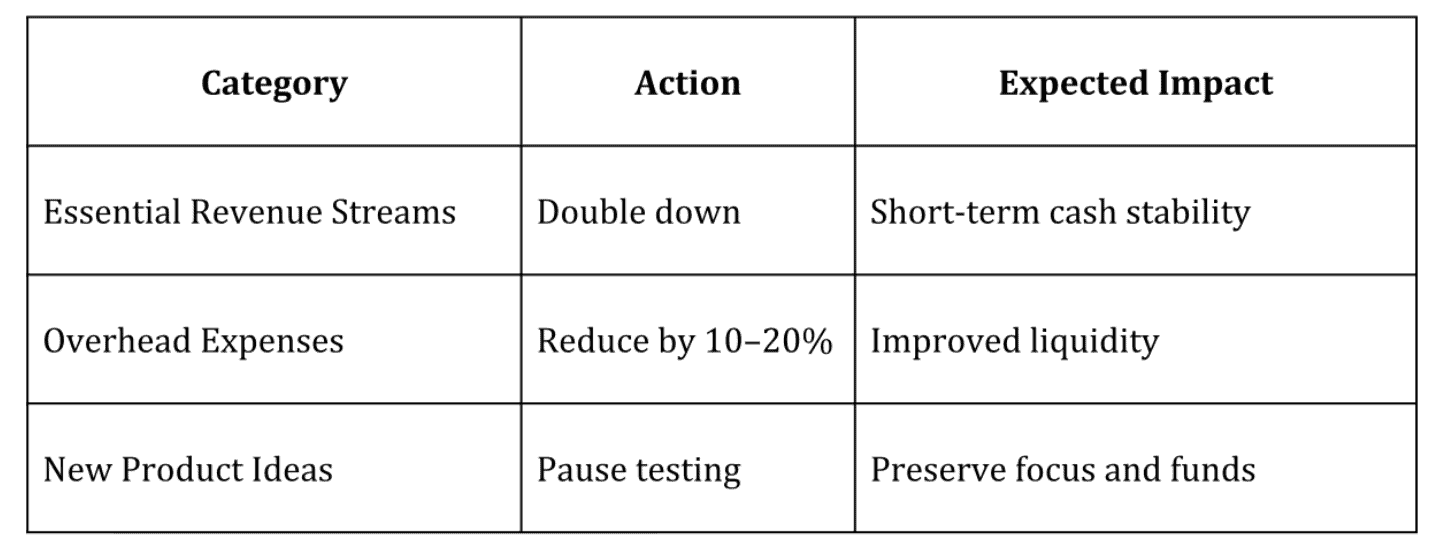
Clarity here prevents “busy work” from disguising unprofitable habits.
The Power of Financial Foresight
One of the most consistent markers of business longevity is cash discipline. Women
founders who establish recurring forecasting habits tend to bounce back faster. Develop a
rolling 90-day cash flow projection — it gives you a forward-looking dashboard and
reduces surprise stress.
If accounting isn’t your strength, delegate wisely or outsource temporarily. Clear, accessible
numbers are an act of self-protection.
Community as Capital
Hard times often isolate leaders. But connection is a renewable resource. Build alliances
with other women founders, local chambers, and small business networks. These circles
are intelligence hubs: they surface grants, partnerships, and even client referrals that
individual operators might never see.
Before asking, offer: share lessons, recommend suppliers, or host a joint webinar.
Reciprocity breeds resilience.
Reframe Challenges as Training Grounds
Every crisis exposes weak systems — and that’s valuable feedback. View turbulence as a
live audit of your company’s readiness. Ask yourself:
- Where did communication break down?
- Which processes bottlenecked?
- What decisions took too long – and why?
Then translate those answers into standard operating improvements, not self-criticism.
Checklist for Turning Lessons into Leverage
- Identify three recurring operational issues.
- Document each fix as a repeatable process.
- Train one team member to own that process.
- Review it quarterly for updates.
When each crisis becomes an upgrade, you outgrow the cycle of reaction.
Education as a Resilience Multiplier
Periods of uncertainty can be ideal moments to reinvest in your own expertise. Earning an
education doctorate online can strengthen your leadership and organizational insight
without pausing your business.
Programs in educational leadership and organizational innovation develop the kind of
change-management thinking that helps founders design systems that last. The online
format allows you to integrate learning into real operations, transforming theory into live
strategy. Over time, this dual-track growth can position you not only to survive crises but to
mentor others through them.
Protect Your Energy Like a Profit Center
No spreadsheet captures the cost of burnout. Set non-negotiables: rest windows or
morning routines that ground you. Emotional clarity amplifies strategic clarity.
Think of recovery as recharging your business’s executive battery — because it is.
When fatigue whispers “quit,” remember: sustainability is a form of strategy.
Navigating Cash, Confidence, and Change
Before reacting, stabilize with these moves:
- Negotiate with vendors — loyalty is currency.
- Switch to shorter feedback cycles (weekly instead of quarterly).
- Reforecast every 30 days until patterns stabilize.
- Keep your messaging authentic; silence erodes trust faster than bad news.
- Document small wins. They rebuild morale and show progress under pressure.
The ‘Hard Times, Smart Moves’ FAQ
Women founders often face the same questions during downturns. Here’s a reality check
built from field-tested experience.
- Should I pivot my business model immediately? Not without evidence. Use customer interviews and sales data to validate demand first. Premature pivots waste resources and dilute brand equity. Controlled experimentation beats drastic reinvention.
- How do I Handle layoffs without damaging culture? Transparency. Share the rationale, future vision, and gratitude. People remember how leaders made them feel – especially in loss.
- Can I ask clients for longer payment terms? Yes, but balance empathy and assertiveness. Frame it as continuity management: “Extending terms helps us keep serving you without interruption.”
- How do I sustain confidence when revenue drops? Anchor in measurable action, not emotion. Confidence grows when you see progress – even small financial wins or client renewals.
- Is it wise to take on new debt during uncertainty? If the capital fuels productive capacity (not just survival burn), it can be strategic. But attach every loan to a clear ROI timeline and repayment plan.
- What’s the single best investment when everything feels unstable? Clarity – in your numbers, your priorities, and your narrative. Ambiguity costs more than any downturn.
Strength Is a System, Not a Mood
Resilient women leaders don’t just endure hardship; they engineer their way through it.
They build adaptable systems, cultivate learning habits, and lead with grounded optimism.
The storm passes, but the architecture you build in its midst — financial discipline,
emotional intelligence, community alliances — becomes permanent capital.
Tough times test everyone. Smart systems ensure you pass.


